SERVICE / 03
Even walkways. Better questions.
An uneven panel can create a trip point or collect water. The full route helps explain what should happen next.
THE TRIP POINT
Photograph the route, not just the joint.
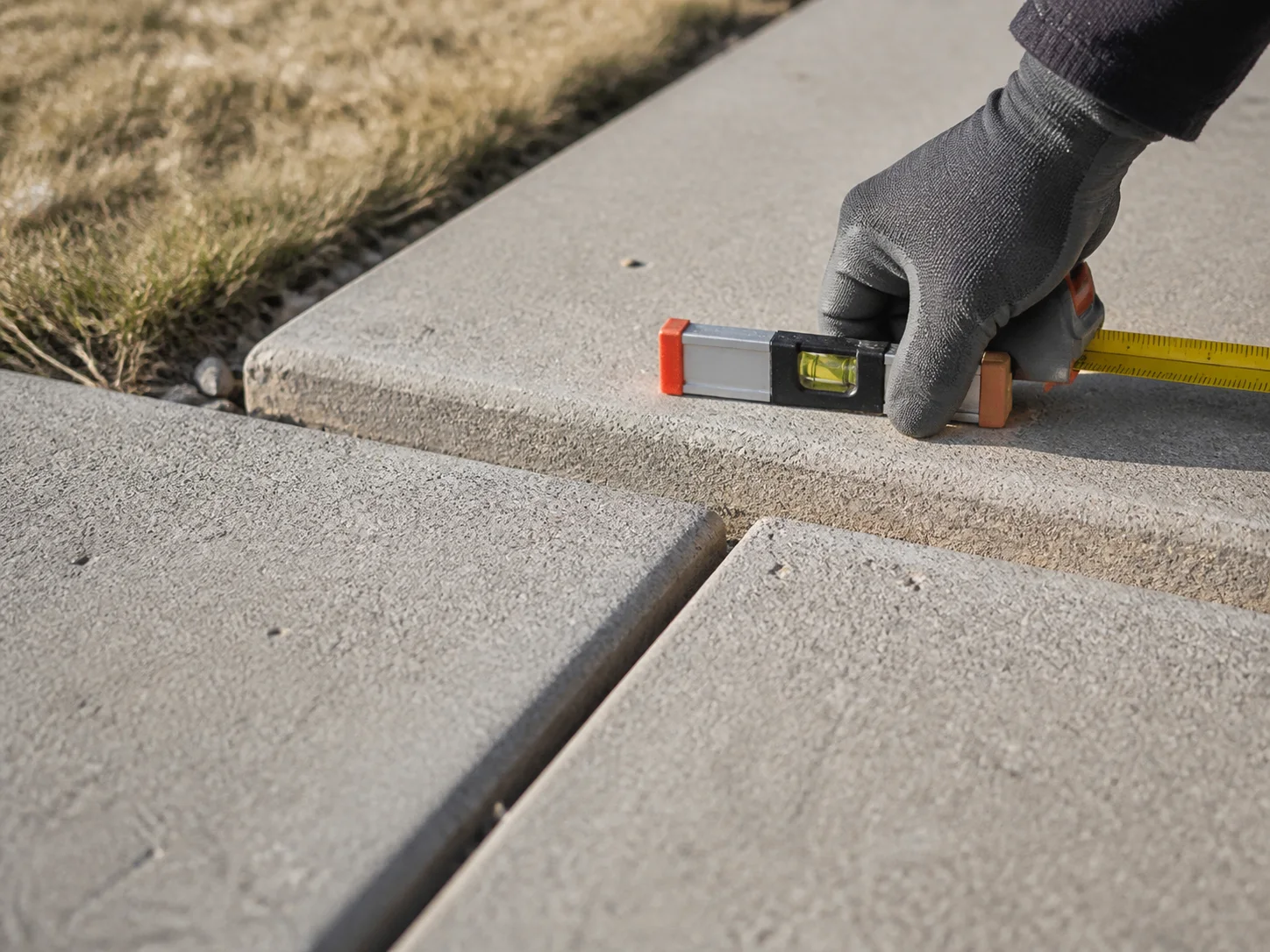
Uneven sidewalk panels can affect pedestrians, strollers, deliveries, drainage, and the connection between a home and the street. The first step is to document the height difference and route around it—not simply to label the panel a trip hazard.
Look at the full walkway. Roots, drainage, landscaping, frost, nearby construction, poor compaction, and movement beneath the panel may all be relevant. A provider should check whether the concrete is intact enough to lift and whether adjoining panels will remain compatible.
01 / WALKWAY SIGNS
Small height changes matter.
A sidewalk problem may appear as a raised edge, dropped panel, open joint, sloped route, or water that remains after rain. The effect depends on where the movement occurs and who uses the walkway. A small change at a frequently used entrance may deserve attention before a larger change in a rarely used area.
Photograph the route looking along its length and across the joint. Include steps, doors, curbs, landscaping, walls, drains, and any place water collects. If the walkway is shared or commercial, note pedestrian volume, accessibility requirements, and limited-access times.
Record what you know
- Which panel or joint is uneven?
- Does the route affect an entrance or curb transition?
- Are roots, water, or soil changes nearby?
- Is the panel cracked or mostly intact?
02 / EVALUATION
Make the path safe to reason about.
Sidewalk leveling may be an option when the existing panel is suitable for lifting and the cause of movement can be addressed or managed. The provider may consider panel thickness and condition, supporting base, adjoining surfaces, access, drainage, and the desired finished transition.
Lifting one panel does not automatically repair a failing base or stop water from moving beneath the walkway. If the panel is badly damaged, movement is tied to a larger structure, or the route requires a new layout, replacement or another repair may be a better fit.
Ask how the recommendation handles the edges. A walkway should meet doors, steps, curbs, driveways, and adjacent panels in a way that makes sense for people using it.
03 / PREPARE
Send enough context to avoid a guess.
Include the property location, walkway use, approximate dimensions, and several photos. A wide photo shows the route; a close photo shows the joint; a side angle shows the height difference. If you have a straightedge or level available, it can provide context, but do not put yourself in a risky position to measure a trip point.
Describe when you noticed the change and whether the walkway changed after heavy rain, landscaping, freeze/thaw conditions, or nearby work. Mention concerns about access, visitors, deliveries, pets, or commercial foot traffic.
Share walkway details04 / CONNECTED SURFACES
The walkway rarely tells the whole story.
A sidewalk can connect a driveway, porch, steps, street, or parking area. If one of those surfaces has also moved, include it in the request. The provider can then evaluate the transitions together instead of treating one panel as an isolated defect.
For a driveway approach, see driveway leveling. For a general slab evaluation, see concrete leveling. If the walkway is part of an outdoor living area, review patio and porch leveling. Confirm coverage through the service-area page.
FAQ / SIDEWALKS
Questions about uneven panels.
Is a sidewalk trip point always a leveling job?
No. The panel may be suitable for lifting, but cracking, roots, drainage, base conditions, adjoining surfaces, and the cause of movement can change the recommendation.
Can leveling improve water flow?
It may improve a transition or slope, but water sources and drainage conditions should be evaluated too.
What photos are most helpful?
Take one photo along the walkway, one across the joint, and one showing the nearby entrance, curb, driveway, drain, or landscaping.
NEXT STEP