SERVICE / 01
Concrete leveling for settled slabs.
The right repair starts below the surface: support, drainage, access, and the condition of the slab.
THE EVALUATION
Lift the question before lifting the slab.
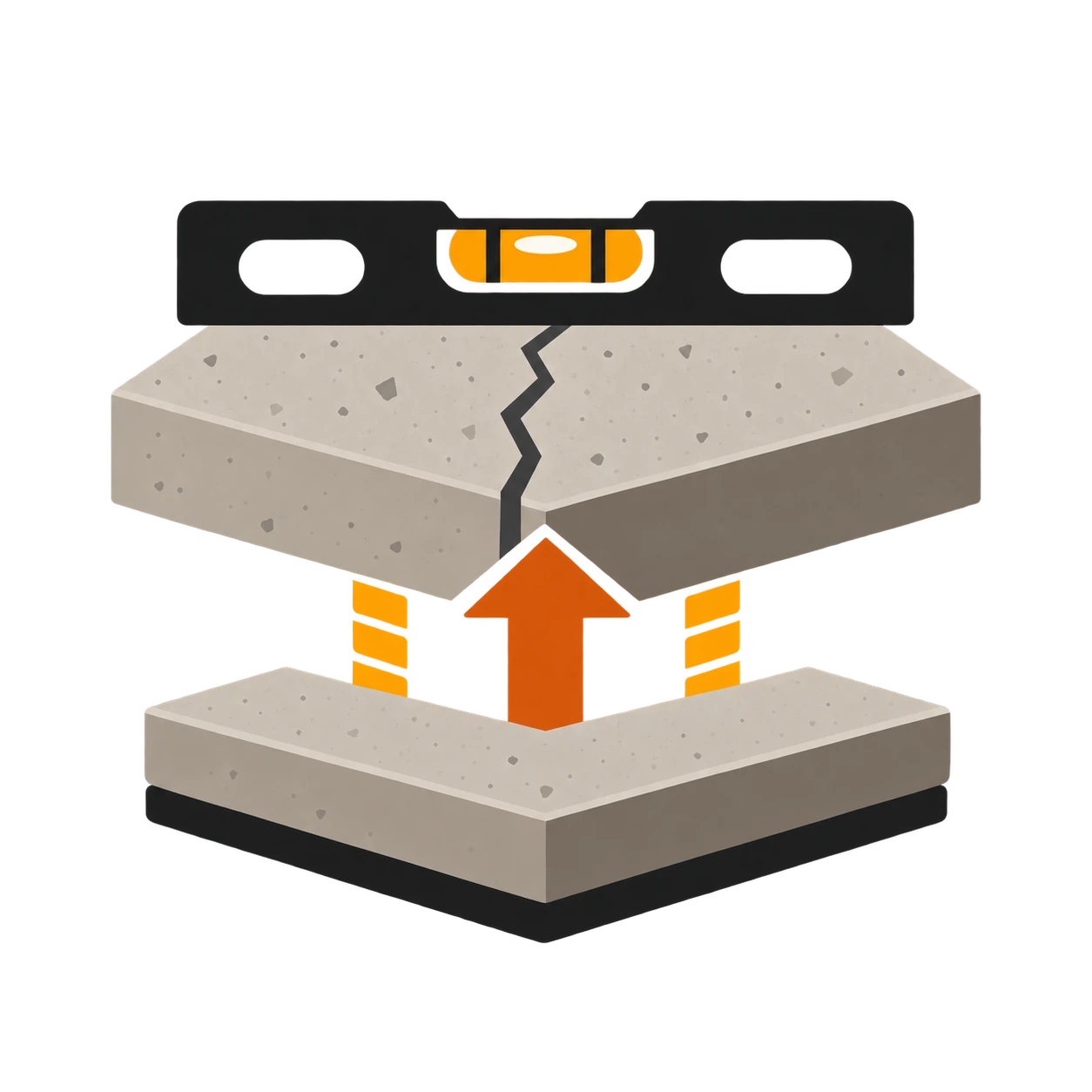
Concrete leveling may be worth investigating when a driveway, sidewalk, patio, porch, pool deck, or other non-structural slab has dropped, tilted, or separated from a nearby surface. A visible low corner is useful information, but it does not identify the cause by itself.
A responsible evaluation looks at the slab and its surroundings together. The provider may consider the condition of the concrete, material beneath it, drainage, access, adjoining surfaces, and how the area is used.
01 / WHAT MOVED?
Settlement has a story.
Concrete can settle when the material supporting it changes. Erosion, poor compaction, water movement, seasonal moisture changes, landscaping work, and nearby construction can all be part of the picture. In some cases, the slab has dropped into a void. In others, the surrounding grade or adjoining surface has changed.
Cracks, gaps, a tilted panel, or a step at a transition are symptoms rather than a diagnosis. Photograph the full surface and the specific change that concerns you. Include downspouts, soil edges, steps, curbs, walls, or other details that may help explain where water and pressure move.
Questions worth asking
- Is the slab intact enough to lift?
- What may have changed beneath or beside it?
- Will drainage or grading need attention?
- Will the repaired slab meet surrounding surfaces correctly?
02 / METHOD
Lifting is a tool, not a promise.
Mudjacking and polyurethane/polyjacking are different approaches with different site considerations. Access, slab thickness, void size, soil conditions, drilling requirements, finish expectations, and the provider’s equipment all matter.
The best method is not determined by a slogan or generic price comparison. Ask what the provider observed, why it recommends a particular material, and what limitations apply. If the slab is badly damaged, the base is unstable, water is still removing support, or a structural condition is involved, lifting may not be the complete answer.
Concrete leveling can also be part of a broader repair plan. Sealing joints, improving drainage, correcting a downspout, replacing a damaged section, or addressing a nearby edge may be necessary.
03 / PREPARE
Make the first conversation useful.
You do not need to know the repair method before requesting an evaluation. Note the surface type, approximate length and width, the location of the low point or trip edge, and whether the change affects vehicles, pedestrians, doors, steps, furniture, or drainage.
Take a wide photo showing the surface in context, a close photo of the transition, and an angle that shows any water or grade concern. If you know when movement became noticeable or remember nearby landscaping or construction, include that detail.
For commercial properties, include access restrictions, operating hours, pedestrian routes, loading areas, or other practical constraints.
Share the surface details04 / DECISION GUIDE
Level, repair, or replace?
Concrete leveling is not automatically better than replacement. Lifting may be reasonable when the existing slab is suitable, movement can be addressed, and surrounding conditions support the repair. Another option may be more appropriate when the concrete is extensively broken, the cause is unresolved, a structural connection is involved, or the surface needs a new layout.
Ask for a plain-language explanation of the condition and the expected limitations. The conversation should make clear what the proposed work addresses, what it does not address, and whether related drainage or surface work is recommended.
Related surfaces
Review driveway leveling, sidewalk leveling, and patio, porch, and pool deck leveling. Browse the Colorado Springs service areas before submitting a request.
FAQ / CONCRETE LEVELING
Common questions.
Can every settled slab be lifted?
No. The slab’s condition, support, drainage, access, surrounding surfaces, and cause of movement affect the recommendation.
How much does concrete leveling cost?
Cost depends on surface size, access, material, settlement, preparation, and method. A provider needs project details before giving a responsible estimate.
What should I send?
Send the surface type, approximate dimensions, photos from multiple angles, the visible change, and information about drainage, landscaping, or nearby construction.
NEXT STEP